
2026 marks a turning point for IT departments worldwide. After several years of relative stability, hardware prices are experiencing a sharp, across-the-board increase. This is not a simple cyclical adjustment: the convergence of several structural factors — trade tariffs, memory component shortages and the explosion of AI-related demand — is creating a perfect storm that affects the entire industry, from Dell to Apple, HP, Lenovo and every player in the market.
For businesses, this situation poses a major challenge: how do you maintain a performant, secure and up-to-date IT fleet while managing budgets under intense pressure? This article breaks down the root causes of this crisis and proposes concrete strategies to address it.
+20 to 34%
increase in average enterprise laptop cost
70%
of global DRAM absorbed by AI
+55%
DDR5 price surge in Q1 2026
1. An unprecedented context: three crises converging
To understand the scale of the current situation, we need to examine three forces that are compounding and reinforcing each other.
Trade tariffs: a global commercial shock
Trade tensions between the United States and China have led to massive tariffs on electronic products and their components. According to the Consumer Technology Association (CTA), these tariffs could increase technology product prices by 45 to 70% in certain categories, with an estimated impact of $69 billion on US GDP.
Europe, while less directly affected by these specific tariffs, suffers the knock-on effects: the reorganisation of global supply chains is creating pressure across the entire market, and memory and component prices — set globally — affect all markets without distinction.
The memory crisis: when AI devours global DRAM
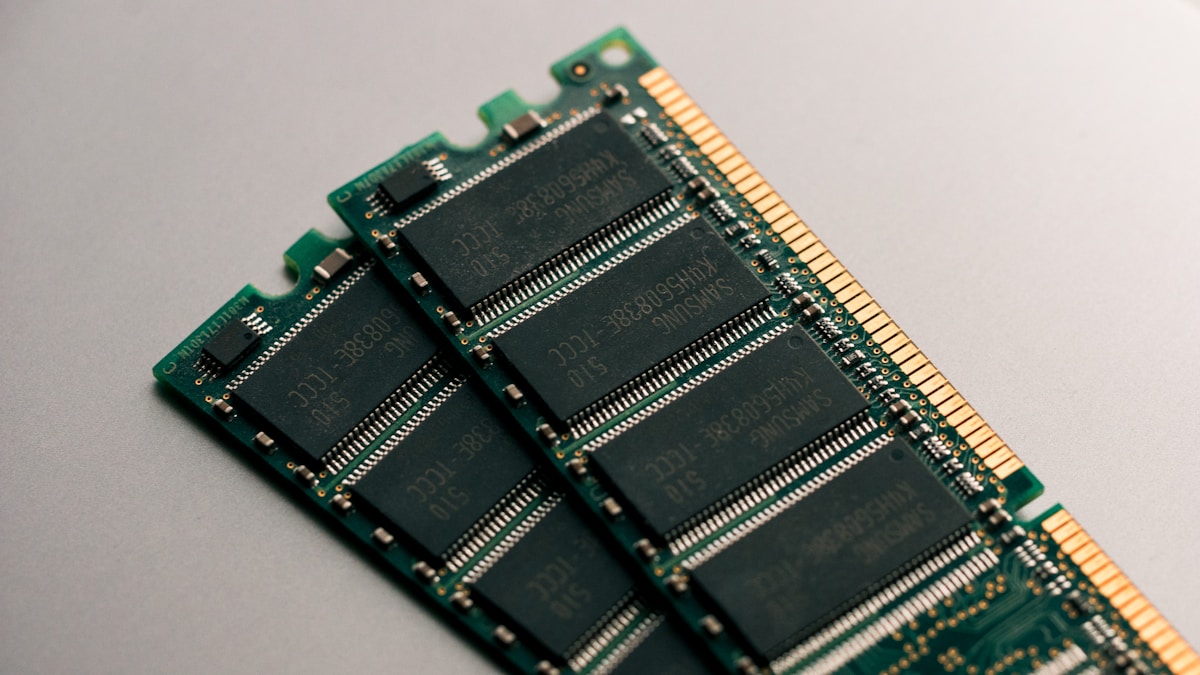
This is perhaps the most structural factor. According to IDC analysts, up to 70% of global DRAM production in 2026 is being absorbed by artificial intelligence datacentres, leaving only 30% for all other uses: PCs, smartphones, traditional servers, IoT devices.
The consequences are immediate and quantifiable: conventional DDR5 prices rose 55 to 60% between Q4 2025 and Q1 2026. Certain high-performance components (HBM) surged by over 170%. HP confirmed that the contribution of memory to the total cost of a PC has doubled compared to the previous year.
The AI PC paradox: manufacturers are pushing enterprises towards "AI PCs" equipped with NPUs (Neural Processing Units) and extended memory, but actual demand for local AI tasks remains low in most professional environments. The majority of AI workloads run through the cloud and the browser (Copilot, ChatGPT, etc.), not through local hardware. Yet PC models without these capabilities are becoming increasingly rare.
Supply chain reorganisation
Faced with geopolitical tensions, manufacturers are accelerating the relocation of production away from China. HP is developing partnerships in Thailand and Mexico. Dell is diversifying towards Vietnam and India. Lenovo is strengthening production in Eastern Europe and South America. These transitions, while strategically sound, generate additional costs in the short to medium term: logistics, compliance, upskilling of new production lines.
2. Impact by manufacturer: who is affected and how
All market players are impacted, but response strategies vary considerably from one manufacturer to another.
Dell Technologies
Dell was the first to act aggressively. From December 2025, the company implemented 15 to 20% increases across its PC and server ranges. Dell also cancelled all outstanding quotes, replacing them with new pricing. This "first mover" approach has the merit of clarity, but immediately puts IT budgets under pressure.
Lenovo
Lenovo followed a similar path by cancelling its existing pricing grids from 1 January 2026, with internal estimates of 10 to 15% increases across its entire range. The Chinese giant, the world's leading manufacturer with 27.2% market share, benefits from its scale when negotiating component prices, but remains exposed to tariffs as a China-based manufacturer.
HP Inc.
HP opted for a more gradual strategy, with announced increases of 5 to 10% initially. The company is banking on manufacturing diversification (Thailand, Mexico) and building buffer stocks to absorb the shock. HP acknowledges, however, that this mitigation strategy itself comes at a cost.
Apple
Apple stands out by choosing, for now, to absorb the bulk of tariff-related cost increases. The company's high profit margins and vertical control of its supply chain make this possible in the short term. However, analysts question the sustainability of this approach if tariffs persist and the memory crisis worsens. Upcoming Mac and iPad refreshes could include more visible price adjustments.
The wider ecosystem
Beyond the big four, the entire IT ecosystem is affected: server manufacturers (Supermicro, HPE), networking players (Cisco, Aruba), storage (NetApp, Pure Storage) and even the refurbished market are seeing their supply costs rise. Chromebooks, often used as economical alternatives, face the same supply constraints as vendors prioritise higher-margin premium models.
Key figure: according to IDC, global PC shipments reached 270 million units in 2025, up 9.1%. But this growth masks a shift towards the premium end, with a scarcity of entry-level models under $600/€600. Enterprises renewing PC fleets at under €800 per unit are beginning to encounter serious sourcing difficulties.
3. A structurally volatile market
IDC describes the 2026 IT market as "extremely volatile" and specifies that current constraints are "structural and persistent, not cyclical". Unlike the COVID-era shortages (2020-2022) that were primarily driven by temporary logistics disruptions, the current crisis combines fundamental factors that could persist into 2027 and beyond.
This volatility creates major uncertainty for CIOs and CFOs who need to plan their IT investments. Traditional annual budget cycles clash with a reality of fluctuating prices, where a procurement delay of a few weeks can prove significantly more expensive.
Furthermore, Gartner warns of a new phenomenon: specification downgrades at constant price points. Rather than raising listed prices, manufacturers are reducing base configurations — less RAM, reduced storage, previous-generation processor — to maintain an attractive catalogue price. The outcome for the enterprise is the same: achieving the same level of performance costs more.
4. Strategies to navigate the crisis: optimise rather than endure
Faced with this landscape, businesses are not powerless. Several strategic levers can help control the impact on IT budgets while maintaining a performant and secure fleet.
Conduct a comprehensive audit of the existing fleet
Before any purchase, it is essential to know precisely the state of your fleet. How many machines genuinely need replacing? Which ones can be extended by 12 to 24 months with targeted interventions (RAM upgrade, SSD replacement, clean reinstall)? A rigorous audit often reveals that 20 to 30% of planned renewals can be deferred without impacting productivity.
Extend asset lifecycle
The historical reflex of replacing a PC every 3 to 4 years deserves to be questioned. With proactive management — performance monitoring, preventive maintenance, optimised software updates — many machines can function effectively for 5 to 6 years. Modern Management tools like Microsoft Intune and Endpoint Analytics enable you to objectively measure fleet health and identify machines that truly require replacement.
Rethink your sourcing strategy
Diversifying supply sources has become essential. This means not relying on a single manufacturer, exploring the premium refurbished market (which has gained considerably in quality and reliability), and seriously evaluating leasing vs. purchasing. Leasing in particular allows you to smooth costs over time and integrate hardware replacement into a predictable OPEX rather than volatile CAPEX.
Negotiate volume deals and plan ahead
Enterprises that anticipate their needs and negotiate multi-year framework contracts with their suppliers benefit from preferential pricing and price visibility. In the current context, locking in prices for 12 to 18 months can deliver substantial savings. The largest manufacturers (Dell, HP, Lenovo) offer Enterprise programmes with negotiable terms on configurations and associated services.
Accelerate cloud strategy
For certain use cases, desktop virtualisation (Windows 365, Azure Virtual Desktop, Citrix) offers a relevant alternative. Rather than investing in powerful machines for every employee, a thin client or an older PC can access a performant cloud environment. This approach is particularly suited to mobile workers, external contractors and specialised use cases requiring occasional compute power.
Our recommendation: do not treat this crisis purely as a procurement problem. It is an opportunity to rethink your IT asset management strategy holistically: audit, prioritisation, lifecycle extension, purchase/lease/cloud mix, and centralised governance through Modern Management tools. The enterprises that will emerge strongest from this crisis are those that turn a budget constraint into a lever for lasting optimisation.
5. How EMAZIS can help
At EMAZIS, we support enterprises in optimising their IT fleet and navigating this crisis through a structured, pragmatic approach.
Fleet audit and diagnostics: we carry out a complete inventory of your IT assets (PCs, Macs, mobile devices, servers), assess their actual condition and identify devices that can be extended versus those requiring priority replacement. This audit includes a current cost analysis and a realistic budget projection factoring in the new market conditions.
Optimised procurement and sourcing strategy: we help you define the best sourcing strategy for your real needs: multi-vendor negotiation, evaluation of refurbished options, purchase vs. lease arbitration, and order planning to capitalise on the most favourable pricing windows.
Modern Management deployment: implementing cloud-native management with Microsoft Intune, Autopilot and Endpoint Analytics gives you real-time visibility into fleet health and enables you to intelligently extend the life of your devices. It is an investment that pays for itself quickly in the current context. We detail this approach in our dedicated article on Modern Management with Intune.
Governance and ongoing management: beyond one-off interventions, we set up dashboards and governance processes that enable your IT department to manage the fleet proactively, anticipate renewals and control costs over the long term.
6. Conclusion: turning constraint into opportunity
The IT price surge of 2026 is a reality that no enterprise can escape. The drivers are multiple, structural and interconnected: trade tariffs, memory shortage, AI demand explosion and supply chain reorganisation. All manufacturers are affected, from Dell to Apple, and every market segment is under pressure.
But this crisis is also an opportunity. Organisations that rethink their approach to IT asset management — combining rigorous audit, lifecycle extension, sourcing diversification and Modern Management adoption — will not merely survive the crisis. They will emerge with a better-managed, more resilient and structurally more cost-effective IT fleet.
The key is to act now. Every month of delay in optimising your IT strategy translates into avoidable additional costs. At EMAZIS, we believe the best response to this crisis is not to cut investment, but to make it smarter.
Ready to optimise your IT fleet management?
Let's discuss your IT strategy in the face of rising prices. Audit, sourcing, Modern Management: first consultation free, no commitment.
Schedule a call